

Ok, I have a little “mini-mission” for you…
If you take any kind of prescription medications (like insulin, blood pressure meds, etc.) go and count how many days you have left before you need a refill.
(I’ll wait.)
Now imagine you’re 2 weeks into a grid-down situation… and that’s all you have left!
What’s your plan?
If you shrugged your shoulders, you’re not alone…
Over 60% of Americans take prescription medications… but less than 10% have any emergency backup system.
Well, no worries, Warrior…
When A Disaster Or Other Crisis Sabotages Your Access To Life-Saving Meds You Don’t Have To Be Sh*t Out Of Luck!
Here’s An Exact Blueprint For Creating Your Survival Medication Stockpile (That Really Works)…
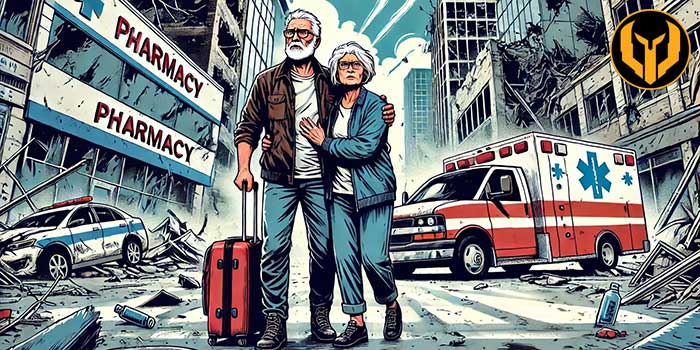
Ok, you don’t have to drop a gazillion dollars to take control of your own health – before, during, or after a real-world crisis shuts down your local pharmacies, hospitals, or first-responder access.
In fact, you already have way more control than you may think you do.
Now, I’m not a doctor myself (nor do I “play one on TV” as the saying goes), but with a few minor ailments I deal with myself (thanks to diving in and out of trenches and foxholes for 10 years!), I’ve done my share of research on what I can do to “be my own doctor” and support my family members who have medical issues.
Here are some powerful strategies you can start using right away…
The Prescription Med Cover-Up Doctors & Pharmacies Won’t Tell You About…
Ever wonder if those expiration dates on your pills are just a pharmaceutical conspiracy to make you buy more?
Well, you’re not entirely wrong – and in fact, the truth about medication expiration dates might surprise you (and potentially even save your life in a crisis situation).
Here’s what most people don’t realize…
That date stamped on your prescription bottle isn’t actually a “throw this away immediately” deadline.
The FDA’s own Shelf Life Extension Program has discovered something the pharmaceutical companies don’t advertise…
… that most medications remain effective for years beyond their printed expiration dates.
Yet we’re constantly told to flush them the moment they “expire”, right?
The truth is that tablets and capsules typically maintain about 90% of their potency for more than 5 years when stored properly.
That’s right… 5 years!
Some medications (like antibiotics) can be preserved for an astounding 10 to 30 years when sealed correctly and stored in proper conditions.
That’s not just a buffer — that’s peace of mind during extended emergencies.
Liquid medications, on the other hand, break down much faster, usually within a year.
So if you’re prepping, prioritize tablets and capsules whenever possible.
What’s Even MORE Important Than Your Prescription Medicines’ “Expiration Dates”?
Now that you know that your meds aren’t limited to just the “one year” on the label, there are still ways to extend their effectiveness for the long term.
You see, their storage environment actually matters more than the date on the bottle.
Think of heat, light, and moisture as “the 3 horsemen of the prescription apocalypse”.
They’ll destroy your meds faster than anything else.
The sweet spot for storing medications is between 59 and 77 degrees Fahrenheit with humidity levels below 60%.
Your medicine cabinet in the bathroom?
Actually one of the worst places due to shower steam and temperature fluctuations.
If that’s where you’re keeping them, run (don’t walk) and get them out of there immediately!
Another Easy Survival Medicine Hack To Extend Your Rx Meds Even Further…
One technique that pharmaceutical preppers swear by for greatly extending medicine shelf-life — and that I’ve personally adopted — is vacuum sealing.
This simple step removes oxygen (which degrades medications) and creates a moisture barrier that dramatically extends shelf life.
For additional protection, throw in an oxygen absorber packet and throw them into an opaque, airtight container that’s “mobile ready” if you need to evacuate to another location away from home.
(Quick Tip: Make sure you’re keeping proper labels on each vacuum-sealed package so you don’t have to open them up just to find out what’s inside.)
This method can push the effectiveness of your meds for an additional one to two years.
How To Know If Your Prescription Meds Have “Gone Bad”…
Contaminated meds can do more harm than good.
But how do you know if your stored meds have gone bad?
It’s not that hard actually – simply look for any of these non-negotiable “warning signs”:
- Any discoloration (having images of what a “good” pill looks like helps in the long run, but “blotchiness” is also a tell-tale sign it’s headed downhill)
- Unusual odors
- Tablets that are crumbling or softening
- Liquid medications that show signs of crystallization
If you spot any of these changes, it’s time to replace them.
No exceptions.
How To Build Out Your Emergency Rx Stockpile: Strategies That Work With Doctors & Insurance
Ok let’s be honest—the biggest hurdle isn’t figuring out “where” to store your meds.
It’s getting enough of them in the first place, right?
But how do you actually convince your doctor and insurance company to give you enough medication to build a proper emergency supply?
Especially when insurance companies treat a 2-month supply of heart medication like you’re requesting launch codes for nuclear missiles?
Well, I’ve got few strategies that work without getting flagged as a drug-addict or insurance fraudster.
Start with the direct approach…
Have an honest conversation with your doctor.
Most physicians are actually sympathetic to emergency preparedness concerns when you frame it properly.
Don’t walk in demanding “extra pills” — that’s a one-way ticket to suspicion.
Instead, explain your situation like it is…
“Hey doc, I’m working on my family’s emergency preparedness plan, and I’m concerned about maintaining my health if pharmacies are closed for an extended period. What options do we have to ensure I have an adequate emergency supply of my medication?”
If that doesn’t work (well, I’d personally find a new doctor), but you’re not out of options…
Go on “vacation”…
Most insurance companies have a little-known “vacation override” policy that can work in your favor.
This allows for a one-month vacation supply of medications — and you don’t need to be jetting off to Fiji to qualify.
You can use this for emergency preparedness even if your “vacation” is actually your “stockpile strategy”.
Just be prepared to potentially pay out-of-pocket for these additional prescriptions if they exceed your regular allowance.
A pill saved is a pill earned…
For medications you absolutely can’t live without, the “gradual accumulation” method is pure gold.
Start refilling your prescriptions at the earliest allowed date (usually Day 23-25 of a 30-day supply).
This creates a small buffer of extra medication that grows over time without violating any insurance policies.
After several months, you’ll have built up a significant emergency supply without raising any eyebrows.
Plan Out Your “Off-Grid” Prescription Preservation Plan Like A Pro…
For temperature-sensitive medications (like insulin), you need special solutions when the power is out and refrigeration isn’t available.
Finally, another use for your toilet that doesn’t require a new magazine rack…
You see, your toilet’s back tank (NOT the bowl knucklehead!) is surprisingly effective stand-in when your fridge is on the fritz.
Putting your meds in a weighted airtight baggie to keep them submerged, this will keep medications 15-20°F cooler than room temperature.
Rotate Your Survival Meds Stockpile The Way You Rotate Your Survival Food Supply
To prevent waste, create a “medication rotation system”.
Just as you should be doing with your food horde, you want to always use your older medications before they expire and then rotate in the newer ones.
And whatever you do, don’t skip doses to stretch your supply!
That strategy can backfire spectacularly and lead to serious health complications.
But Even With All These Strategies Under Your Belt, An Extended Disaster (Or An All-Out “Collapse” Of Our Infrastructure!) Can Leave You On Life-Support So…
Here’s The Ultimate “Prescription Apocalypse” Survival Hack For The Warrior-Ready…
Even the most perfectly organized survival plan for your prescriptions faces one unavoidable reality…
… your medicine stockpile WILL eventually run out!
But while pharmaceutical companies have only existed for about a century, humans have been treating their ailments with plants for thousands of years.
Those little pills in your medicine cabinet?
Many originated from compounds found in plants you can grow right in your own backyard.
Now let me tell you right now… I’m NOT suggesting you toss your prescriptions for a handful of weeds.
But when disaster strikes and the pharmacies are closed indefinitely, knowing your botanical backups could literally save your life.
Here are a few that I pulled out of my handy “Home Doctor” guide…
Take “anxiety” medication or have “stomach issues”?
Lemon Balm is an easy-to-grow perennial that contains compounds like rosmarinic acid that work on the same gamma-aminobutyric acid (GABA) pathways in your brain that anti-anxiety medications target.
Research has shown it can reduce cortisol levels (your body’s primary stress hormone) while calming gastrointestinal spasms that often come with stress and anxiety.
Heart problems?
Hibiscus isn’t just for making that ruby-red tea at fancy cafés.
This plant contains anthocyanins that have demonstrated impressive ability to lower blood pressure—sometimes comparable to low-dose ACE inhibitors in certain studies.
It’s also hepatoprotective, meaning it helps shield your liver from damage, which becomes crucial when medical care is unavailable.
Diabetic?
Tulsi (also known as “Holy Basil”) is an adaptogen that helps your body respond to both physical and psychological stressors.
Studies have demonstrated its ability to regulate blood glucose levels too, making it potentially valuable for those with diabetes facing medication shortages.
It can even do double-duty by helping manage your blood pressure and support cardiovascular function.
Respiratory issues?
Mullein deserves some serious real estate in your survival garden!
Its expectorant properties help clear congestion while reducing inflammation in bronchial tubes.
For people with asthma or COPD facing a medication shortage, mullein tea or tinctures might help manage symptoms until pharmaceutical options become available again.
The long and short of it is that there ARE substitutes out there that are easy enough for anyone to grow in some potted plants around your home that can fill in the gaps when the pharmacies are all turned to rubble.
The key though is to start growing these medicinals now – before you need them.
(BTW, I got a lot of this info from “The Home Doctor” book and it’s one of my “survival medicine bibles” to use as an indispensable reference guide so I don’t have to memorize all this stuff!)

Ok, let me be crystal clear here…
I’m not telling you to ignore expiration dates completely… or become your neighborhood “witch doctor”.
What I am saying is that with the proper plan, you no longer have to be a slave to the big box drug companies or wait in the miles-long waiting line outside the Red Cross medical tent when a disaster hits us hard.
But true medication preparedness is a system, not a single solution.
You should ALWAYS have extra medication on hand because shortages happen even during routine events (like snowstorms).
But under extreme conditions, your stockpile gets one pill smaller with each dose and the self-reliant Warrior isn’t going to just “wait” for something bad to happen before you get a clue.
Take action today.
Inventory what you have right now… have that straightforward conversation with your doctor about emergency preparedness… implement at least one storage improvement I shared with you…
and consider growing at least one medicinal herb for a medicine you regularly take, as a backup.
Remember, when disaster strikes, there’s no Amazon Prime delivery for life-saving medication. The preparations you make during “normal” times (remember them?) create the options you’ll have during a crisis.
Don’t wait for a disaster to get healthy. Diet and age appropriate exercise will do more than prescribed medication. Pharmaceutical companies don’t make money from healthy people. Doctors are encouraged to prescribe medications not healthy diet and exercise.
Some fasting breaks some problems. Do research don’t depend on pharmaceutical industry to regain your health.
I would have artificial joints in several places, if I had stayed in the pharma system.
There’s more than one dose of adrenaline in those epi-pens.
In our wilderness rescue training, we were shown how to carefully dismantle the pen to get to the extra dose (if you are lucky there may be enough for 2 or ‘extra’ doses. OK, not a long-term solution, but for a typical hiking scenario, it could be enough to keep someone alive long enough for the group to be rescued (or to evacuate the person).
Taken care of the situation years ago. Good to see that you have given this advice to the warriors. Yes, these prescriptions will last for Many more years than dated. It is because of the GREED of Big Pharma that they have the much earlier dates.