

Imagine you’ve got to hoof it more than 100 miles to safety, with nothing but your bugout bag strapped to your back.
Sounds like a plot from a survival TV show, right?
Well, it’s not just fiction… I actually did it.
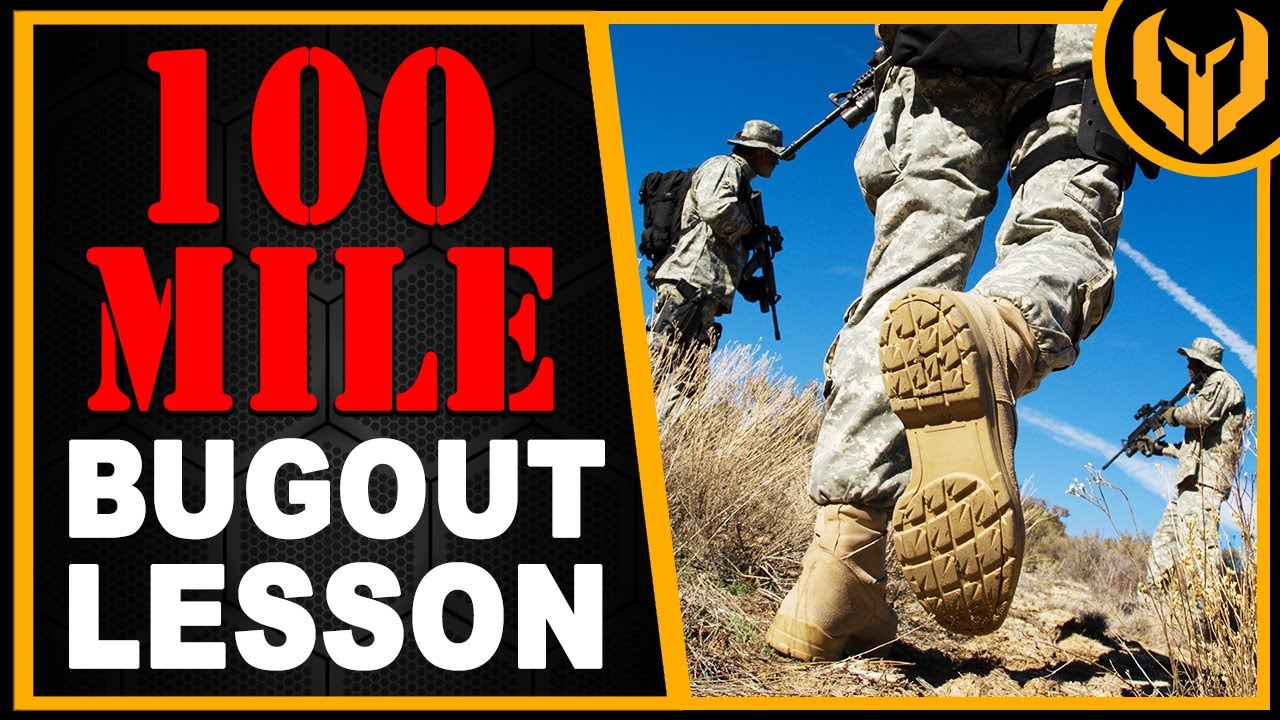
Each year in the 10th Mountain Division, I walked over 100 miles with my rucksack (equivalent to a bugout bag), and let me tell you… and it was brutal!
After pounding the pavement and dirt trails, lugging my life on my shoulders, I’ve distilled the essence of my pain and epiphany into 8 little golden nuggets of survival wisdom for you to chew on…
I Walked 100 Miles With My Bugout Bag. Here’s What I Learned…
Bugout Trekking Tip #1: The Mission
Pack with purpose, Warrior!
Your bugout bag isn’t a mobile attic and every single ounce counts… so every item of gear you pack must earn its spot.
Will you be walking on a scorched desert trek or a chilly mountain trail?
Consider your destination, climate, and the terrain along your planned bugout route and plan for the dynamics you would face if you were forced to travel by foot.
Bugout Trekking Tip #2: Freeze At Night?
“Travel light, freeze at night” was our military mantra in the infantry.
Fortunately, because of advancements in survival gear, you don’t need to turn into an icicle to shave off some pounds from. your bugout bag.
For example, ditch the bulky sleeping bag for a compact, lightweight survival bivvy.
My setup?
A tactical bivvy bag that’s a feather on the scales of my ultra-light 16 pound bugout bag.
Bugout Trekking Tip #3: Hide Your Stuff
During military marches, we had resupply points.
You can do the same by establishing a caching plan to stash your essentials along your route.
Hide caches of water, food, and yes, even ammo, at strategic spots.
It’s like a survival treasure hunt, reducing your load and ensuring you have supplies within reach when needed.
Bugout Trekking Tip #4: Gear Placement
Physics isn’t just for nerds.
Keep heavy gear low in your bugout bag and close to your body to allow your body’s core to do the carrying for you more than the smaller muscles of your shoulders and upper back.
Plus, you’ll be able to balance the load better and have more mobility to avoid a dangerous fall.
Make sure your bugout bag has a well-padded waist belt that can transfer the burden from your back to your hips, making your load feel lighter and more manageable.
Bugout Trekking Tip #5: Shrink-Wrap It
Vacuum-sealed bags – the kind pitched on television infomercials to save you closet space – are just as magical for packing your bugout clothing and other softer gear.
Not only do they compact your clothes to give you more space, but they also add a layer of waterproofing to protect them as well.
Remember, water is heavy (about 8 lbs per gallon!) so wet clothes are dead weight you don’t need.
Vacuum-sealed bags can be a game-changer in managing your bag’s space and weight.
Bugout Trekking Tip #6: Tactical Pouch Use
Tactical backpacks with MOLLE pouches are lifesavers.
Organize the gear you pack into your pouches by “function”:
- One pouch for your shelter and other “camp” supplies
- One pouch for your food and cooking supplies
- One for foot care supplies (like mole skin, extra socks, powder, etc.)
- And one for other handy “tools” you’ll want fast access to
In survival, mental clarity is as crucial as physical strength.
Organizing your gear simplifies your access to the items you need in a hurry… reduces stress… and keeps you mentally sharp.
Bugout Trekking Tip #7: Micro-Organize
Ever thought of using a cosmetic case for gear?
It’s perfect for corralling small items into one accessible, compact space.
Roll it, stash it, and voilà… you’re not digging through a bottomless pit of a bag anymore.
Organization can significantly streamline your bugout packing process and save you a ton of frustration and time on the trail!
Bugout Trekking Tip #8: The “Breakaway Bag”
In the military, we had an “assault pack” that was designed just for quick ops where were were in-and-out and didn’t need to haul a lot of unnecessary gear that would slow us down and jeopardize our mission.
You should also apply the same logic to your bugout bag.
Add a small, integrated sling pack, or other smaller bag, for essential short-term gear lets you move light and fast without the full load.



great video.I am very interested in any information how I can get one of those roll up organizers and the add on everyday carry bags from the video. I think they would be very helpful in fine tuning my organization.
If you get a cosmetic bag, get a WHITE one so you can actually see what’s in it. A white pillowcase as a liner to your BOB will also improve visibility.
Great video. Thanks. Things can go south while traveling, so caching may not be an option. Traveling with your bag may need to include more hydration items. In the west, civilization can sometimes be a long way. Water, potable water out here becomes critical. If and when you find it will require good filtration and/or little drops of clorox to make the water potable. Really like the organization accessory bags. Really good thinking and the cosmetic bag is super! I’ve found 2 gallon Zip-lock bags work great too. Thanks for your video and ideas.
You have a good website.
Every video I have watch I have learned something useful. This one did not disappoint. Thanks
I was thinking of buying some sustainment packs for the purpose of having “add on” supplies or to change out bags. They can also be carried with a shoulder strap so they can serve as extra carrying gear in case you have unexpected people in your group.
A series of buried resupply caches sounds great, but I always worry someone else might find my supplies or that there will be other people wandering around., but its free storage.
I use Ziplock bags like crazy. If you do a nice, neat job and place them into a sturdy bag or container, your stuff stays neat, clean and more organized than leaving them loose. To me they are useful like duct tape and paracord.