

Mary Lindsey thought that she and her husband, Charles, were “prepared“…
Even though their home was far enough away from the raging wildfires scorching the northern California woods, they were no strangers to these threats and had taken all the necessary precautions “just in case“.
The power company had given them warning that their power was being shut down as a precaution, so they had flashlights at-the-ready and there would be more than enough time to “get out of Dodge” if the fires even hinted that they were headed their way.
Mary and Charles went to sleep around 11:00pm with the feint glow of the fires far off in the distance and all seemed quiet.
But all that changed at 2:30am…
In The Middle Of The Night, Their Entire Neighborhood Discovered The Truth About Being “Prepared” And…
For This Couple And Their Neighbors, Danger Was Closer Than They Thought…
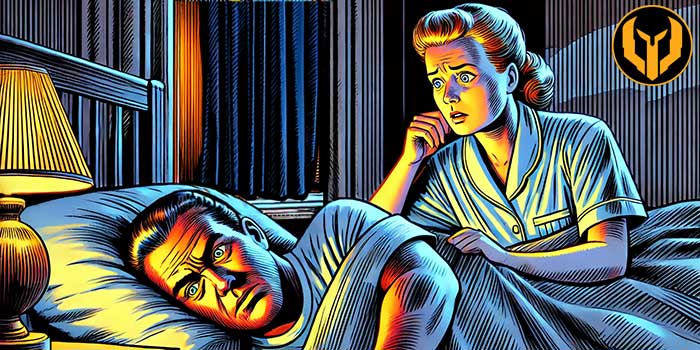
As prepared as Mary and Charles thought they were, it was the middle of the night when they discovered it wasn’t enough.
It really wasn’t their fault…
Like everyone else in their neighborhood, Mary and Charles followed the direction of their local officials and, while there was no immediate danger to them and their home, they truly felt that they were ready to leave in an instant if an evacuation order was given.
In fact, they had prepared well in advance with the county’s “reverse-911 alert system”… were on the emergency email subscriber list… and had neighbors who looked out for each other with a phone notification system.
There was just one thing missing…
… POWER!
You see, the fire DID make a turn for the worse that evening – and officials DID issue a “Mandatory Evacuation Order” for all residents to IMMEDIATELY evacuate the area before they were trapped by the blaze.
But since the electricity had been turned off… their entire neighborhood was taken by surprise as they lay sleeping in their beds when the order was given.
There was no phone service to wake them up…
No emergency call over the television or radio…
No sirens going off…
… they were all clueless of the threat closing in on them!
It wasn’t until Mary – maybe woken by the sound of the helicopters overhead – scuffled to the window with her flashlight and saw that her entire street was engulfed in thick smoke, that she knew something was wrong.
It even surprised a local police officer cruising by who, while making a final pass through what he “thought” was a vacated neighborhood, looked up and saw Mary’s flashlight in the window and asked her why she hadn’t left yet.
What he hadn’t realized is that NO ONE in her area even knew of the evacuation order being given, due to the failure of their electric-dependent alert system.
And they weren’t the only ones…
In another area, Janice Bell – a single woman with multiple sclerosis – was trying to evacuate her home in the pre-dawn darkness, only to find that her car was trapped inside her garage because the electric door opener didn’t have power.
For 2 hours, she tried getting help until she was finally able to flag down a neighbor who helped her open her garage door so she could flee the area before the flames engulfed her – trapped with no way to leave.
To Truly Prepare For A Short-Warning Disaster, You Have To Dig Deeper Than Just The Initial Effects Of The Threat And…
These Are The Deadly Disaster “Domino Effects” No One Thinks About (Until It’s Too Late!)…
Look, any ONE of the threats in a disaster has the potential to take lives, right?
Loss of power… empty gas pumps… jammed highways… overrun hospitals… ALL are “survival factors” you MUST be prepared for – and the COVID-19 pandemic has shown us that over and over again in the last two months.
When you lose multiple conveniences at the same time, they knock each other down like dominoes – each one causing the next one, or make it worse than it would be by itself.
Threats like these can happen to you and your family, too – because if it’s not a wildfire, it could be a hurricane.
If it’s not a hurricane, it could be a massive blackout.
If not’s a blackout, it could be a flood, riots and protests “gone wild”, or even an earthquake.
I know, because it happened to ME…
It wasn’t long ago that I went through a very similar ordeal as a massive “wall of water” from a flash flood dragged 75 homes into the river that runs through my tiny Texas town in the wee morning hours around 2:00am.
Many of my friends barely escaped with their lives.
Worse, a dozen of my fellow townsfolk died in that horrific disaster.
They didn’t need to.
I learned some VERY valuable lessons from that fateful night about thinking through all of the possible things that can go wrong – and then having a plan to deal with each factor.


I always keep coins and smaller bills for change on hand and a full tank of gasoline, good weather or bad… When leaving my southeast Louisiana home two days after Katrina to get to the nearest working airport to keep speaking engagements in the North, I wanted to top off my tank not knowing how near the next opportunity would be. I was nearly 150 miles into Mississippi before I found a station with electricity. There stood a number of motorists, stranded, with no cash, only credit cards that couldn’t be used. No way I could offer help to that many so I gassed up, paid up, and drove on. They’d thought they were covered with such assortments of cards.
One mindset is to play the “what if” game. If this happens, do that. And always have backup plans (and backup plans for the backup plans).
I learned a good acronym in the Army for planning, P.A.C.E. – primary, alternative, contingency, emergency)
The 6 Ps – prior planning prevents piss poor performance
Remember Pvt Murphy’s rule – if it can go wrong, it will go wrong, at the worst possible time.
Stay safe
I live in a cyclone area. I assume that no-one is going to be able to help. So it is a case of all the essentials for survival and fuel for the car. This includes supplies for the animals in case we have to evacuate and small battery operated radio. While everyone is heading for the bottleshop I am going to the post office, collecting last minute items if the shops are still open. I don’t assume there will be any money facilities, including cash, and if the weather report says the cyclone is going “this way” I assume it is going every other way instead! Also, I never assume towers will still be standing, so communications won’t be either. eg radio, TV, mobile phones. If you have a satellite phone, there will be cloud cover so it won’t be consistent! I don’t think I am being silly, last time we had a cyclone pass 15km away and the power was off for 10 days.
I hope this confirms that it is not worth saying “she’ll be right”!
Not all communications antennas are mounted on towers. Some are on buildings and water tanks and could be more secure even during hurricanes. But that is a moot point if they have no backup power or are unable to connect to the PSTN via cable or other means. Your dedicated satellite phone may work if the satellites it works with are not over-subscribed (many are). However, if you have Starlink, which uses satellites much closer to earth than traditional satellites, your connection should work. We have enjoyed strong Starlink signals for the past two years through thunderstorms and heavy cloud coverage. Some cell companies like T-Mobile and Apple are adding a satellite texting capability for emergency use. However, it remains to be seen how well they will work.
Cash, access to cash, debit cards don’t work at gas stations, etc. when power is out
Gas pumps themselves won’t work without power. Most stores will not make or allow sales without a register system. Only options might be siphon or steal (neither of which are great).
An inability to communicate from the lack of power, cell service, and landline power can be mitigated by having a Starlink satellite Internet connection with a decent sized solar backup battery. Additionally, an amateur radio that links to a local radio repeater and Winlink radio email (See http://www.winlink.org) can provide an email capability. Some cell carriers now offer texting via satellite for emergencies.
Amateur radio repeaters will also be down from loss of power. Would have to be line of sight comms with hand helds, which is better than nothing.
Not true in many cases! Our repeater works 24/7 indefinitely using solar panels and solar battery (LiFePO4) banks, plus a 5 KW (overkill) propane generator with a 500 gallon tank that stores indefinitely. The initial cost is expensive but worth the peace of mind in the long run.
You sir are very well prepared in the communication area, but many others are not. I know of at least a dozen or more repeaters that went down due to power outages from hurricane Ian. The first 10 days we had no cell service, as their towers were down (some physically, others no power). I was able to get some communication through via my hand-held radio to someone who had not lost power to get updated news and to let family know of our status. We spent 14 weeks with no power from the grid, but my generator got a great workout. I do speak from experience, not hypothetically.
Stay safe. Long live the republic.
I’m sorry you went through such a bad experience, Christopher. You make a good point and I wrote my comment in haste. (That’s my excuse and I’m sticking with it!)
Whether repeaters can withstand severe weather events is usually dependent on how rich and cooperative the county/Parrish/city is in providing necessary locations and funding, funding by the local ham club, and the desire of the local club to have a repeater system that can survive severe weather. Not all clubs care enough or have the funds and you are often left on your own.
In my local case, I used my retirement savings to bolster our repeater survival because the mean household income in my county is only $26K.
After a career in the US Army, I recently retired from the FCC as its emergency manager, federal agent, and RF engineer. During the previous thirteen years, sadly I was the only employee at HQ even remotely qualified to advise on amateur radio emergency communications. So, all the related issues came to me, to include working on the rulemakings when I had time.
Looking at the nation’s emergency communications (EmComm) readiness as a whole from my experience, I found few localities with repeaters that are able to withstand severe weather events. It is a sign of the times with several reasons, usually monetary.
For survival beyond a few days, I suggest biting the bullet to buy a solar system with serious battery backup. To me, a minimum size is 3 KW of solar panels, a solar charge controller/inverter, and 6 KWH of backup batteries. It’s expensive, but you won’t regret spending the money on it when the power goes out. If you’re in a large city, I would find a way to get out.
If readers look at both of our posts, they can then continue researching what will work best for their situations, since there isn’t enough space here to advise on what will work for everyone. One place to look is at http://www.arrl.org but there are many other places, too.
Unfortunately, I haven’t found a single book to point to that delineates exactly how to set up a local/regional/national communications network based on your location, community size, cost, and with whom you need to communicate (this is key) without going into the weeds.
Good Luck and God Bless!